

CDFI Fund Financial Assistance Awards and OFN Member Loan Funds
This study focuses on one of the CDFI Fund’s core initiatives — Financial Assistance awards offered through both the CDFI Program and the Native American CDFI Assistance (NACA) Program — and how it may affect outcomes for OFN member loan funds.
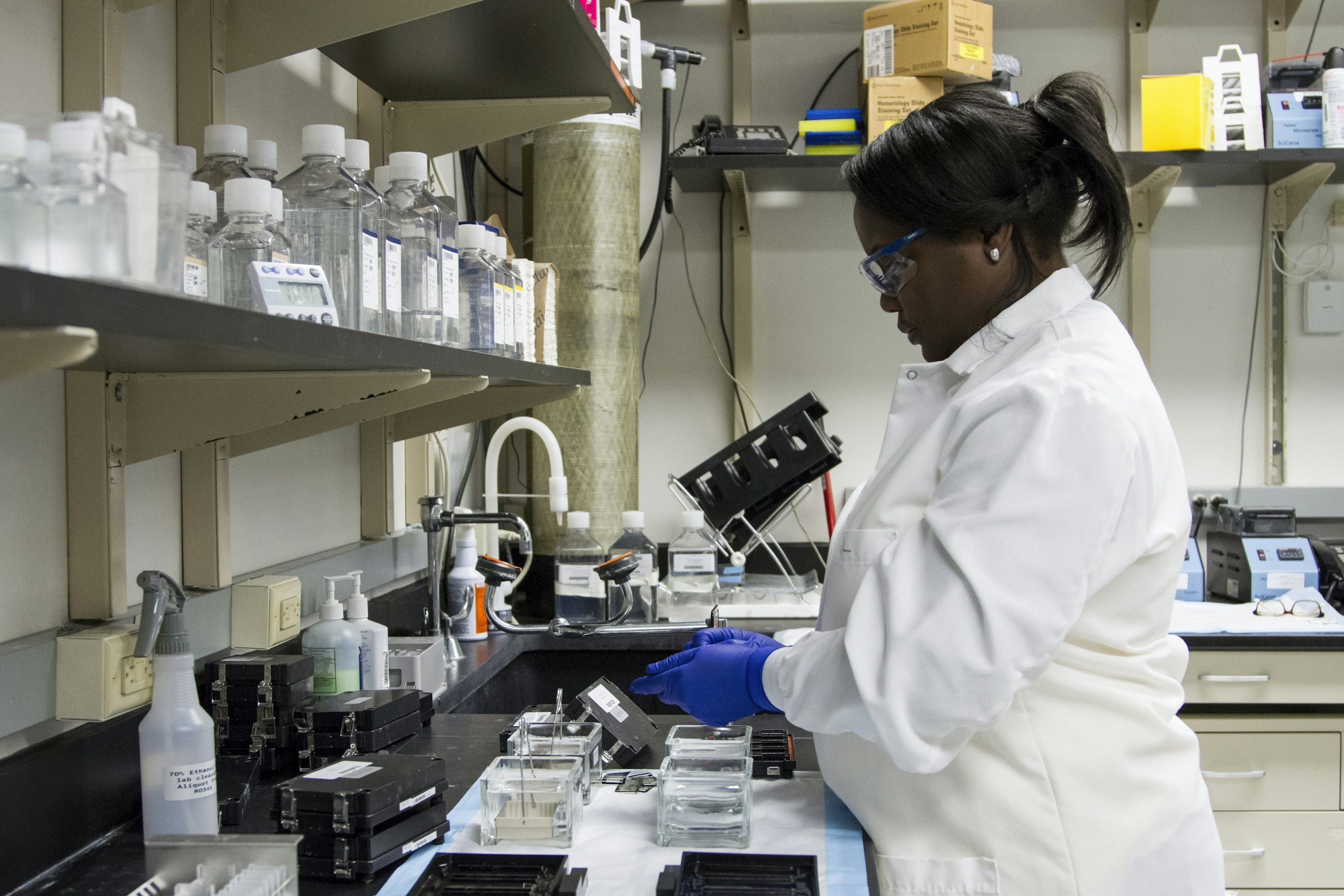
Press Hit: Women in STEM: Perceptions vs. Realities
Women have steadily increased their representation in STEM and among leadership ranks across the corporate world in the past few decades, giving the impression that gender equity has been achieved. But experts — and the data — say otherwise.
Working People Need Access to Paid Leave
Utilizing data from the Worker Paid Leave Usage Simulation Model (Worker PLUS), we estimate the current need for leave in those states that do not have established paid family and medical leave programs; the extent to which the need for leave goes unmet in these states; and the economic losses that families incur as a result of unpaid or partially paid leaves. This report presents our overall findings in these states; we also provide state-level estimates in the Appendix.

The Role of Trust in Advancing Equity in Innovation
This report explores the role of trust in whether and how inventors from historically underrepresented groups choose to engage in patenting, who they decide to collaborate with, and how their experiences with the process itself as well as working with others to navigate it can affect their level of trust and engagement.

Research in Action: Child Care at the Second GOP Debate
In June 2023, we released a report in collaboration with The Century Foundation, which estimated that when American Rescue Plan Act (ARPA) stabilization funds expire at the end of September 2023, as many as 70,000 child care centers could close and 3.2 million children and their parents would lose access to their child care spots as a result. The estimates provided in our report were referenced in a question posed by the moderator during the second GOP Primary Debate held on September 27, 2023.

Parenthood and Entrepreneurship During the COVID-19 Pandemic
In this report, we explore trends in self-employment among parents before and during the COVID-19 pandemic. We find that for mothers of young children in particular, self-employment has increased at a notable rate over pre-pandemic levels. As entrepreneurs who are mothers face unique challenges, including intertwined financial considerations, caregiving responsibilities, and time demands, these findings highlight the need for policies, programs and practices aimed at better supporting entrepreneurs who are parenting.

Mental Health and Entrepreneurship
This brief reviews research exploring the links between mental health and entrepreneurship. It begins by discussing the different ways that mental health issues can influence the decision to start a business and, in turn, how entrepreneurship can impact an individual’s mental health. Next it highlights different estimates of the prevalence of mental health disorders among the self-employed. It then provides examples of existing models and programs that have emerged in recent years to support the mental health of entrepreneurs and concludes with a discussion of the implications for policy, programs, and practice.

Portable Benefits: Unlocking Opportunities for Aspiring Entrepreneurs
In this brief, we examine the concept of portable benefits systems and consider the ways these systems can support entrepreneurship. We review the small-scale federal, state, and local portable benefits policies and programs that currently exist, and we discuss research and thinking on these established programs, the possibilities for larger programs in the future, and the changes that will be necessary to support these broader programs.

Access to Capital for Entrepreneurs: Removing Barriers (2023)
The Kauffman Foundation continues to recognize, with urgency, the significance of the role new and existing businesses play in local, regional, and the national economy. This report continues our series of sharing the state of capital access for entrepreneurs highlighting the need for innovative products and models to improve capital delivery systems.
Event: Unless Congress Acts, We’re Heading Toward a Child Care Cliff
Join The Century Foundation on Thursday, June 22, 2023 from 1:30 to 2:30 PM ET, exactly 100 days from when federal funds sunset, to learn about TCF’s groundbreaking new study about the looming child care cliff and what we can do to avoid it.

Press Hit: Child Care Disruptions Expected as Record Funding Nears an End
For two years, the United States has been effectively running an experiment in federally funding child care providers. The $24 billion disbursed in pandemic relief has been the largest investment in child care in U.S. history. Child care providers have used the money to raise teachers’ pay, buy supplies and pay mortgages.

Child Care Cliff: 3.2 Million Children Likely to Loose Spots with End of Federal Funds
Beginning September 30, 2023, states will face a steep dropoff in federal child care investment. Without Congressional action, this cliff will have dire consequences.

Millions of Working People Still Don’t Have Access to a Single Paid Sick Day
CLASP’s analysis examines access to paid sick leave at the national and state level by income, gender, and hours worked. Our analysis finds that a significant portion of the population still lacks access to paid sick leave, with disparities in access across income and hours worked. Moreover, those disparities are significantly narrower in states and localities with paid sick leave laws.

Racial Equity in Business Ownership: State-by-State Analysis of a New Equity Index
Between 2014 and 2019, the number of women-owned businesses grew by 21%, far outpacing the rate of growth in the number of businesses overall (just 9%). This impressive growth was even more pronounced among businesses owned by women of color, with the number of women of color owned businesses growing at double the rate (43%), and, specifically, the number of African American/Black women-owned businesses increasing by 50%.
Gender Equity in Business Ownership: State-by-State Analysis of a New Equity Index
Between 2014 and 2019, the number of women-owned businesses grew by 21%, far outpacing the rate of growth in the number of businesses overall (just 9%). This impressive growth was even more pronounced among businesses owned by women of color, with the number of women of color owned businesses growing at double the rate (43%), and, specifically, the number of African American/Black women-owned businesses increasing by 50%.

Podcast: Connecting the Gender Pay Gap to Everyone’s Health
In our second of three episodes on the topic, hosts Ericka Burroughs-Girardi and Beth Silver are joined by Dr. Jessica Milli, an economist and the founder of the consulting firm Research 2 Impact. Dr. Milli talks about how the gender pay gap harms our health, entire communities and the economy.

Press Hit: To find balance amid a pandemic, more working moms pushed to work for themselves
As COVID upended domestic life, women's rate of self-employment rose faster than the share of men in the sector.

COVID-19 and Entrepreneurial Firms: Seeding an Inclusive and Equitable Recovery
This report highlights three key insights that may help inform more equitable design of future relief and recovery policy and programs for small and new businesses, particularly those owned by BIPOC and women entrepreneurs, as well as entrepreneurs in historically under-resourced communities.

Worse than a double whammy: The intersectional causes of wage inequality between women of colour and White men over time
We evaluate the causes of the wage gap at the intersection of race, ethnicity and gender over time in the United States. We analyse the wage gaps for women of colour along three dimensions: relative to White women, relative to men of their respective race/ethnicity, and relative to White men.
Press Hit: Working Moms See Self-employment as a Lifeline
At the start of the pandemic, self-employment rose for both women and men, who have a higher overall self-employment rate, according to an analysis of government data by Jessica Milli, an economist in Washington. But for men, self-employment has since returned to pre-pandemic levels, Milli found. Among women, it remained nine percent higher in February 2022 than two years prior.